
Mastering keyboarding begins with correct finger placement, crucial for efficiency and comfort․ Online resources, including PDF guides, offer structured lessons․
The Importance of Ergonomics and Typing Technique
Prioritizing ergonomics and technique minimizes strain, preventing discomfort and potential injuries like carpal tunnel syndrome․ Proper posture, alongside correct finger positioning – often detailed in PDF guides – enhances typing speed and accuracy․ Efficient technique reduces wasted movement, boosting productivity and overall well-being while using a keyboard․
Benefits of Learning Correct Finger Placement (Speed, Accuracy, Health)
Adopting correct finger placement dramatically increases typing speed and accuracy, reducing errors․ Numerous PDF resources illustrate optimal hand positioning․ Furthermore, it promotes better posture, minimizing strain and preventing repetitive stress injuries․ Mastering this skill enhances comfort, efficiency, and long-term musculoskeletal health while typing․
Understanding the Home Row Keys
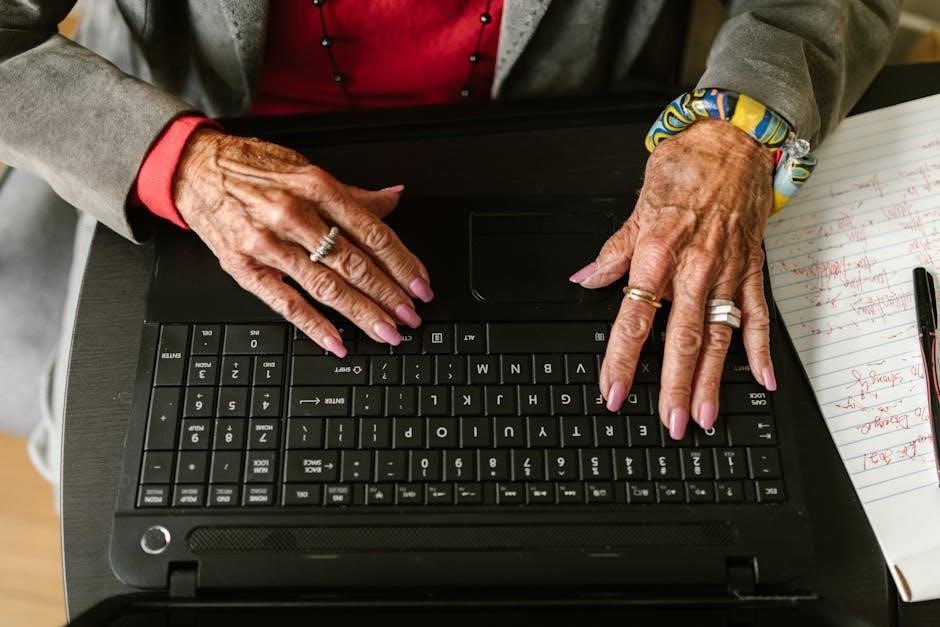
The home row – ASDF JKL; – is foundational for touch typing․ PDF guides emphasize returning fingers here after each keystroke for efficiency․
Identifying the Home Row: ASDF JKL;
Locating the home row – ASDF JKL; – is paramount․ This row hosts the most frequently used letters, minimizing hand movement․ PDF resources visually highlight these keys, guiding proper finger placement․ Consistent return to this position, after every keypress, builds muscle memory and dramatically increases typing speed and accuracy․ Mastering this foundational skill unlocks efficient touch typing․
Returning to the Home Row After Each Keypress
Consistently returning fingers to the ASDF JKL; home row is vital for touch typing․ PDF guides emphasize this practice, building muscle memory for swift, accurate keystrokes․ Avoid “hovering”; each finger should return home after striking a key․ This minimizes strain and maximizes efficiency, forming the core of effective keyboarding technique․

Finger Assignments to Keyboard Keys
Dedicated finger-to-key assignments are foundational․ PDF resources detail which fingers control specific keys, optimizing reach and minimizing awkward movements for faster typing․
Left Hand Finger Assignments (A, S, D, F, G, H, Z, X, C, V, B)
For the left hand, the pinky manages ‘A’, ‘S’, ‘Z’, and ‘X’․ The ring finger covers ‘D’ and ‘C’, while the middle finger handles ‘E’, ‘F’, and ‘V’․ Index finger controls ‘G’, ‘H’, and ‘B’․ PDF guides visually map these assignments, promoting muscle memory and efficient typing․ Consistent practice builds speed and accuracy․
Right Hand Finger Assignments (J, K, L, ;, I, O, P, /, ․, M, , N)
The right hand’s pinky controls ‘L’, ‘;’, ‘․’, and ‘/’․ The ring finger manages ‘K’ and ‘,’, while the middle finger handles ‘I’ and ‘O’․ Index finger covers ‘J’, ‘H’, and ‘M’․ PDF resources illustrate these placements, aiding in developing proper technique and minimizing strain during extended typing sessions․

Utilizing All Fingers Effectively
Efficient typing demands all fingers, avoiding the inefficient “hunt and peck” method․ PDF guides demonstrate reaching keys without strain, boosting speed and accuracy․
Avoiding “Hunting and Pecking”
“Hunting and pecking” – looking at the keyboard while typing – drastically slows speed and increases errors․ Proper finger positioning, detailed in numerous PDF guides, trains muscle memory․ These resources emphasize assigning specific keys to each finger, eliminating the need to visually search․ Consistent practice with these guides builds fluency, transforming typing from a conscious effort into an automatic skill, ultimately enhancing productivity and reducing strain․
Reaching Keys Without Excessive Strain
Efficient typing relies on minimal hand movement․ PDF guides illustrating correct finger placement demonstrate how to reach all keys from the home row․ Avoid stretching or contorting fingers; proper technique minimizes strain and prevents repetitive stress injuries․ These guides often include exercises to build reach and coordination, promoting comfortable and sustainable typing habits for long-term use․

Keyboard Layout Variations and Adaptations
Different layouts, like Dvorak, exist, requiring adjusted finger positioning․ PDF resources detail these adaptations, showing how to relearn key locations for optimized typing․
QWERTY Layout – The Standard
The ubiquitous QWERTY layout, while not ergonomically ideal, remains the dominant standard․ Learning proper finger positioning specifically for QWERTY is essential for most users․ Numerous PDF guides illustrate correct hand placement, detailing which fingers control each key․ These resources often include diagrams and practice exercises to build muscle memory, ensuring efficient and accurate typing, even with its less-than-optimal design․
Alternative Layouts (Dvorak, Colemak) and Finger Positioning
Dvorak and Colemak layouts aim for greater efficiency by placing frequently used keys on the home row․ Transitioning requires relearning finger positioning, but PDF guides specifically designed for these layouts are readily available․ They detail new finger assignments, optimizing hand movement and potentially increasing typing speed and reducing strain, though initial adaptation is crucial․
Resources for Learning and Practice (PDF Guides)
Numerous free online typing tutors and printable PDF keyboard layout charts exist․ These guides illustrate proper finger placement for efficient and accurate typing practice․
Free Online Typing Tutors and Courses
Explore a wealth of free online typing tutors designed to enhance your skills․ Many platforms offer interactive lessons focusing on correct finger positioning, utilizing visual guides and personalized practice․ These courses often incorporate gamified elements to maintain engagement and track progress; PDF resources complement these tutors, providing printable finger placement charts for offline practice and reinforcement of learned techniques, ultimately boosting speed and accuracy․
Printable Keyboard Layout Charts and Finger Guides (PDF Format)
Downloadable PDF charts visually map keyboard layouts and designated finger assignments, serving as excellent references during practice․ These guides reinforce the home row position and proper technique․ Printable resources allow for convenient placement near your workstation, promoting consistent finger placement and minimizing “hunting and pecking”․ They’re ideal for self-paced learning and skill development․
Gaming Keyboards and Finger Positioning
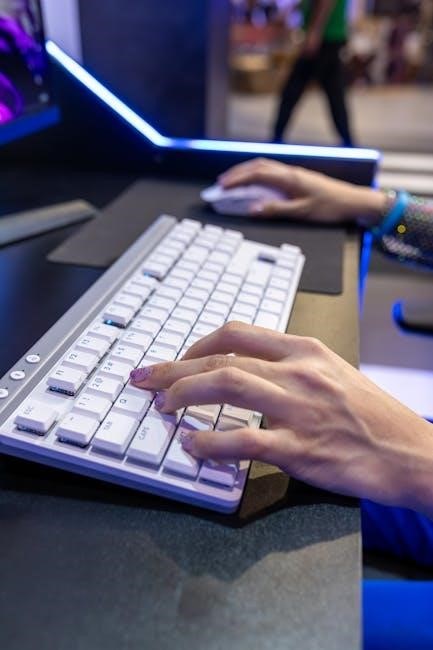
Gaming keyboards, often mechanical, prioritize responsiveness․ Proper finger positioning remains vital, even with specialized switches, enhancing speed and precision during gameplay․
Mechanical Keyboard Switches and Typing Feel
Mechanical keyboard switches dramatically impact the typing experience, offering tactile feedback and varied actuation points․ Razer and other brands design switches for speed and precision․ Correct finger positioning maximizes the benefits of these switches, ensuring each keystroke registers accurately․ PDF guides often illustrate optimal hand placement for different switch types, improving comfort and reducing strain while gaming or typing․
Ergonomic Gaming Keyboards for Comfort
Ergonomic gaming keyboards prioritize comfort during extended use, often featuring split designs or contoured keycaps․ Proper finger positioning is vital to leverage these features, minimizing wrist strain and maximizing efficiency․ PDF resources demonstrate ideal hand angles and finger placements for these keyboards, enhancing both gaming performance and long-term typing health․

Ergonomic Keyboard Designs
Split keyboards and wrist rests promote natural hand positions․ PDF guides illustrate optimal finger placement for these designs, improving comfort and reducing strain․
Split Keyboards and Natural Typing Positions
Split keyboard designs encourage a more relaxed posture, reducing ulnar deviation and promoting natural wrist alignment․ PDF resources detail how to adapt finger positioning to these layouts, maximizing reach and minimizing strain․ Proper technique, illustrated in downloadable guides, ensures efficient and comfortable typing․ These keyboards often require a slight adjustment period to fully benefit from their ergonomic advantages, but the long-term gains in comfort and health are significant․
Wrist Rests and Support
Effective wrist support is vital for preventing carpal tunnel syndrome and maintaining comfortable typing posture․ PDF guides often emphasize the importance of keeping wrists straight and supported during use․ Gel or memory foam wrist rests can significantly reduce strain․ Proper finger positioning, detailed in downloadable charts, complements wrist support for optimal ergonomics and sustained typing comfort․

Troubleshooting Common Typing Issues
Addressing bad habits requires focused practice, utilizing PDF finger guides for retraining․ Consistent effort corrects errors and builds muscle memory for accurate typing․
Addressing Incorrect Finger Habits
Retraining fingers demands patience and deliberate practice․ Begin by slowing down and consciously focusing on proper technique, referencing PDF guides for visual aid․ Utilize online typing tutors that provide real-time feedback on finger placement․ Break down ingrained habits by isolating problem keys and practicing them repeatedly․ Consistent, mindful effort gradually rebuilds correct muscle memory, improving speed and accuracy over time․
Dealing with Pain or Discomfort
Persistent pain signals improper technique or workstation setup․ Consult a PDF guide focusing on ergonomic keyboarding․ Ensure correct posture, wrist support, and relaxed shoulders․ Take frequent breaks to stretch hands and arms․ If pain continues, seek advice from a medical professional; ignoring discomfort can lead to repetitive strain injuries․

Keyboard Shortcuts and Efficiency
Leverage shortcuts to minimize mouse use, boosting speed․ PDF resources detail common shortcuts, enhancing workflow and complementing proper finger positioning skills․
Utilizing Keyboard Shortcuts to Reduce Mouse Usage
Employing keyboard shortcuts dramatically increases typing efficiency, lessening reliance on the mouse․ Many PDF guides focusing on proper finger positioning also incorporate shortcut lists․ Mastering these combinations—like Ctrl+C for copy or Ctrl+V for paste—allows for fluid workflow․ This synergy between technique and shortcuts minimizes hand movement, reducing strain and maximizing productivity while reinforcing learned finger placements․
Customizing Keyboard Shortcuts for Specific Applications
Tailoring keyboard shortcuts to individual software enhances workflow, building upon foundational typing skills․ While PDF resources primarily focus on core finger positioning, understanding application-specific customization is vital․ Many programs allow remapping keys, optimizing for frequently used commands․ This personalization, combined with proper technique, boosts efficiency and reduces repetitive strain, creating a truly optimized typing experience․
On-Screen Keyboards and Accessibility
On-screen keyboards offer alternative input, especially for those with disabilities․ While PDF guides detail physical keyboard technique, these tools provide adaptable access․
Using On-Screen Keyboards for Users with Disabilities
For individuals facing motor skill challenges, on-screen keyboards provide vital computer access․ Though PDF guides focus on traditional finger positioning, these digital interfaces allow input via mouse, trackball, or switch devices․ Adaptability is key; users can customize layout and features․
AltGr Key Functionality on On-Screen Keyboards
Depending on the keyboard layout, the AltGr key exists on some on-screen keyboards․ While PDF guides detailing finger placement primarily address physical keyboards, understanding AltGr’s function – accessing alternate characters – remains relevant․ It expands input options, though its availability varies by software and configuration․
Special Characters and Symbol Input
Accessing symbols like backticks and tildes can be tricky; PDF guides often omit these․ Utilize Character Map (Charmap) for expanded input options․
Accessing Special Characters (Backtick, Tilde)
Locating backticks and tildes presents challenges on standard layouts, particularly with Italian keyboards․ Many PDF guides focusing on finger positioning neglect these symbols․ Microsoft Keyboard Layout Creator (MSKLC) assists in customization․ Consider utilizing the Character Map (Charmap) application for accessing a broader range of symbols, offering a visual selection method for less common characters․
Using Character Map (Charmap) for Symbol Input
Charmap, a Windows utility, provides a visual interface for inserting special characters․ While PDF guides on keyboard technique often focus on standard keys, Charmap bridges the gap for less accessible symbols․ It’s particularly useful when direct keyboard input isn’t available, offering a comprehensive selection for diverse typing needs․
Wireless vs․ Wired Keyboards and Typing Experience
Connectivity impacts typing latency; wired offers a more direct signal․ PDF resources on finger positioning don’t typically address this, focusing on technique instead․
Impact of Keyboard Connectivity on Typing Latency
Wired keyboards generally exhibit lower latency due to a direct connection, crucial for fast-paced typing and gaming․ While PDF guides concentrate on proper finger positioning and technique, they rarely address the subtle impact of wireless signal transmission delays․ Bluetooth connections, though convenient, can introduce slight lag, potentially affecting typing rhythm and accuracy, especially for touch typists․
Choosing the Right Keyboard for Your Needs
Selecting a keyboard depends on individual preferences and typing style․ While PDF resources detail optimal finger positioning, consider ergonomics and switch type․ Mechanical keyboards offer tactile feedback, aiding accuracy․ Wireless options prioritize convenience, but wired connections minimize latency․ Prioritize comfort and a layout supporting proper technique for sustained, efficient typing․
Preventing Accidental Key Presses (Cat-Proofing)
Cats can unintentionally activate keys! A prolonged right shift key hold can trigger unintended input, highlighting the need for keyboard protection․
Understanding Accidental Activation of Keyboard Functions
Keyboards are susceptible to unintended presses, especially from pets․ Holding the right shift key for an extended period—around eight seconds—can unexpectedly activate functions․ This isn’t a disabling feature, but rather an accidental enablement․ Understanding these potential triggers is vital for preventing disruptions․ Consider physical barriers or keyboard covers to mitigate such occurrences, ensuring uninterrupted workflow and data integrity․
Solutions for Preventing Unintentional Input
To combat accidental key presses, explore physical keyboard covers or barriers, particularly effective against curious pets․ Customizing keyboard shortcuts can also minimize unintended actions․ Regularly checking and adjusting sensitivity settings within your operating system offers further control․ Utilizing on-screen keyboards provides an alternative input method, bypassing the physical keyboard entirely․
Maintaining Keyboard Hygiene and Longevity
Regular cleaning is vital for keyboard health; compressed air removes debris, while gentle wiping with a slightly damp cloth disinfects surfaces․ Avoid abrasive cleaners․ Proper storage when not in use protects against dust and damage․ Consistent care extends the keyboard’s lifespan, ensuring reliable performance for years to come․